What the resource covers
It outlines learning components such as instructional controls, role-based access concepts, and review-oriented logs to help diverse stakeholders understand the material.
QuantexHellas serves as an informational resource outlining organized pathways for financial topics, featuring clear terminology, access to independent educational providers, and documentation-friendly summaries. The content emphasizes consistent language and openness for teams pursuing transparent educational material.
QuantexHellas shares concepts and guidance aimed at organizations exploring structured approaches to financial education. The content explains how knowledge is organized, tracked, and documented in a consistent, policy-conscious manner.
It outlines learning components such as instructional controls, role-based access concepts, and review-oriented logs to help diverse stakeholders understand the material.
Content is organized into clear sections that explain context, progression stages, and summaries of changes, supporting smooth handoffs and clear notes.
QuantexHellas emphasizes permission scopes, traceable updates, and documentation-friendly presentation to reflect professional expectations in financial contexts.
Our aim is to present clear, structured explanations of financial knowledge workflows so teams adopt a shared vocabulary, define roles, and maintain consistent documentation practices. QuantexHellas prioritizes neutral, factual descriptions that support oversight and governance processes.
QuantexHellas helps diverse roles interpret the same educational material consistently, from configuration summaries to monitoring states and documented changes.
Lifecycle labels and status views are presented to reduce ambiguity during routine learning tasks.
Change summaries are structured to support internal review and record-keeping practices.
Permission concepts are described to support governance and accountability.
Information is organized to help stakeholders understand what changed, when, and why.
QuantexHellas maintains principles that emphasize precise communication and disciplined learning for financial contexts. The focus remains on clarity, governance, and documentation rather than promotional claims.
We favor straightforward descriptions that help readers comprehend workflows and responsibilities without overstating claims.
Permission concepts, review checkpoints, and documentation practices are highlighted to support accountable operations.
Information is structured for internal notes, review logs, and learning summaries.
Harmonized terminology and layouts support smooth handoffs and shared understanding across roles.
Use the registration flow to start a guided setup aligned with educational clarity and governance-ready presentation.
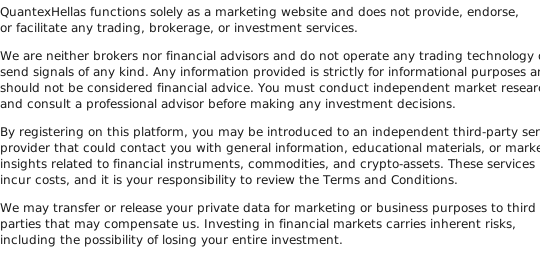
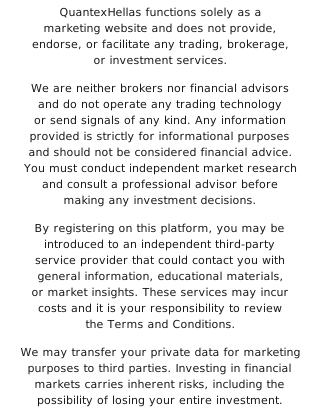
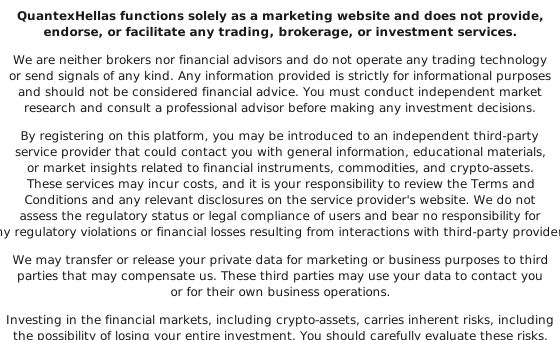
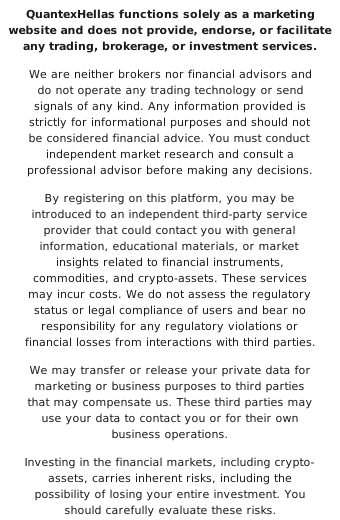
This website functions solely as a marketing platform and does not provide, endorse, or facilitate any trading, brokerage, or investment services.
Read More